Visar inlägg med etikett TRADITIONS. Visa alla inlägg

DAY OF THE DEAD

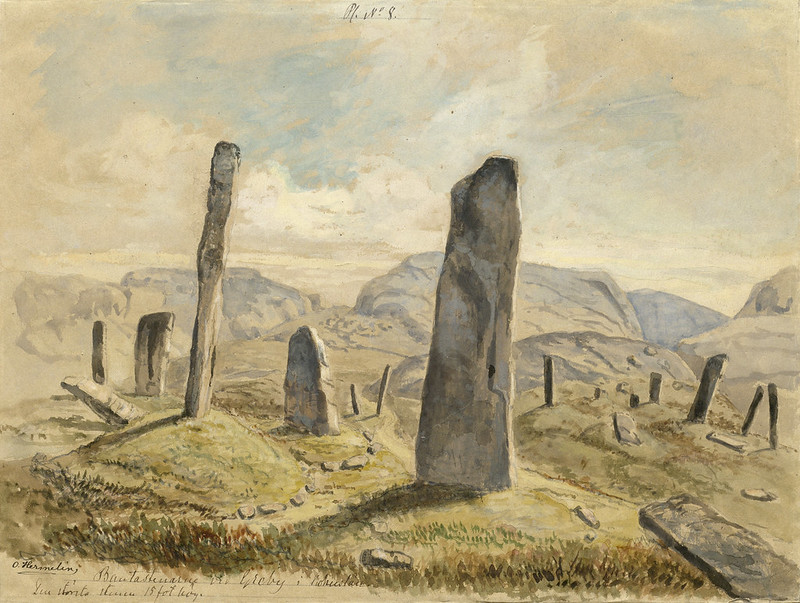
Standing stones, Greby grave field, Tanum parish, Bohuslän, Sweden

If you want a text book example of cultural imperialism via commercial mechanisms, consider the celebration of Halloween in Norway. If you want a text book example of how to honour your dead in Scandinavia, consider visiting an ancient grave site. Strewn across every landscape are the typical mounds and stone circles. These standing stones in Greby, Sweden, were painted in water colour by Olof Hermelin, most likely in the 1880s.
PHOTOGRAPED BY LARS KENNERSTEDT

NO MORE JOTTING IT IN


Nordiska Museet in Stockholm (The Museum of Nordic History) has an excellent calendar named Årets Dagar (Days of the Year). It's a guide to when, how and why for Swedish traditions. Now available as a free app for iPhone and Android, where you an mark days and holidays you want to be reminded of. Perfect for the trivia oriented, Scandi-interested, or the expat who's lost track of the days...
IMAGE: ITUNES

READY TO WEAR FOR YOUR WALLS


Sofia Magnusson, the entrepreneur behind The Folklore Company wanted to combine her appreciation for traditional folklore decorating with a modern lifestyle. She created a web application where you can design your own embroidered wall hanging and have it ready made and delivered! 

I was impressed that they also offer the option of turning your design into a DIY kit. That shows respect for the original craft and handmade creations, earning them bonus points from me. 

And then I found the sample wall hanging above... Ha! It's like they know me... 
A global site is in the makings, so stay tuned folks. 
IMAGE: SAMPLE IMAGE, THE FOLKLORE COMPANY, USED WITH PERMISSION 

SLÅ PÅ RING

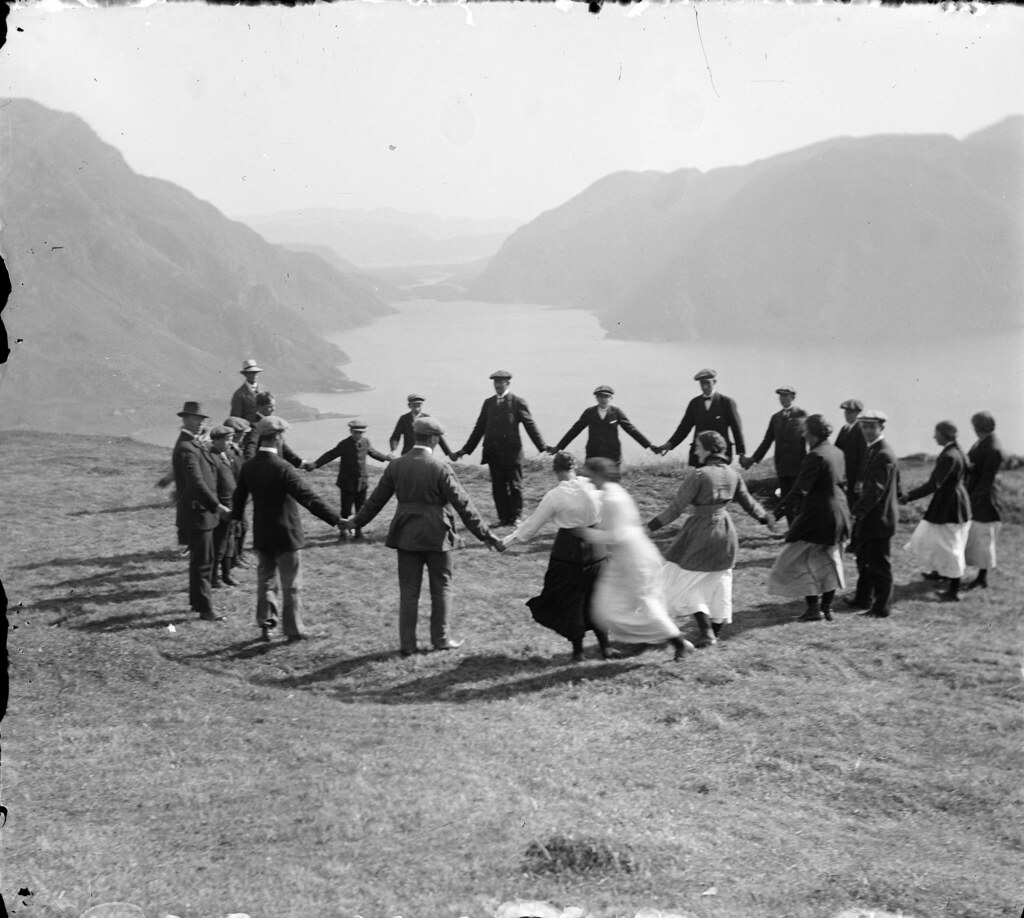
"Slå på ring", Folkefjellet.

The other day as I was picking up my son at school, a group of children were playing Slå på ring, a sing song verse that is part of a game of catch. So is this group from around 1910 on top of Folkefjellet. Looks like fun!
IMAGE: PAUL STANG, FYLKESARKIVET I SOGN OG FJORDANE

ALLHELGONA

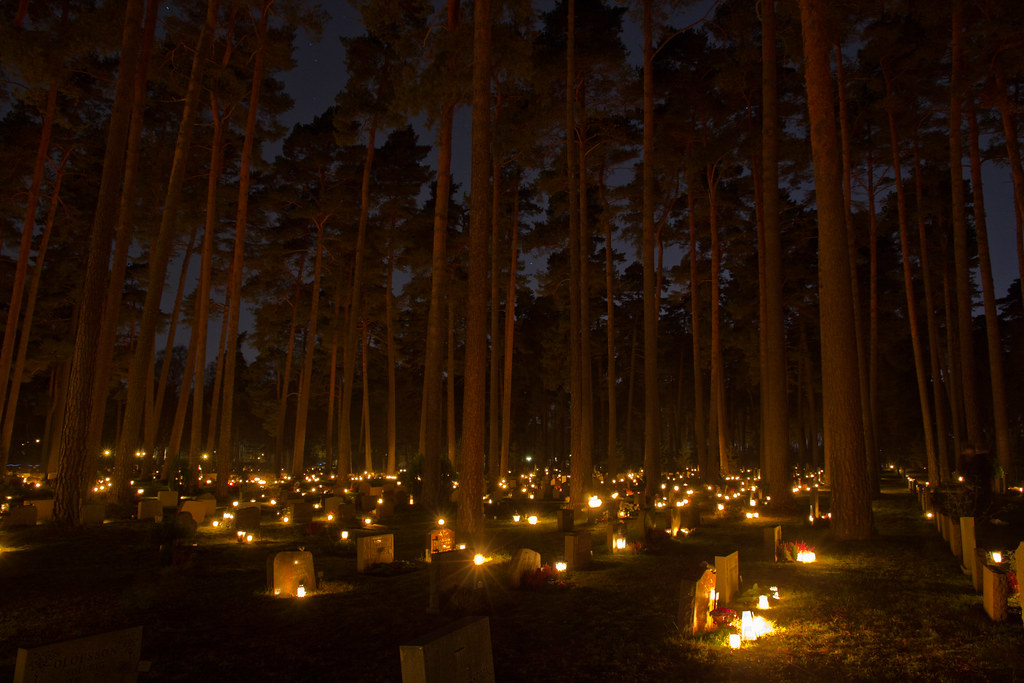
Skogskyrkogården på Allhelgona

In Sweden, we celebrate Allhelgona afton on Friday and Alla helgons dag on Saturday. In Norway, Allehelgensdag is on Sunday. (Need a recap?) This weekend is the first time we will be able to visit a family grave on this holiday, which makes the day all the more meaningful.
IMAGE:SKOGSKYRKOGÅRDEN PELLE STEN VIA FLICKR

THE ARRIVAL OF WINTER

The old Scandinavian calendars runstav or primstav were shaped like modern rulers, with symbols or runes marking important days. One side of the calendar represented the summer months, and the other side winter. The last end of summer marked the end of the harvest, and the beginning of slaughter season.

The day of demarcation between the two sides was October the 14th (or 28 days after the fall equinox). The day is called vinternettene, and marks the date of one of the ancient major quarterly sacrificial rites, höstblot.

A blot was usually performed in a building dedicated to sacrificial and ritual purposes, a hov, and involved a sacrifice of food and animals. Blood from the animal was sprinkled on participants, walls and inventory of the hov. A feast followed the sacrifice.

And today we received the first snow, how appropriate.

VALBORG


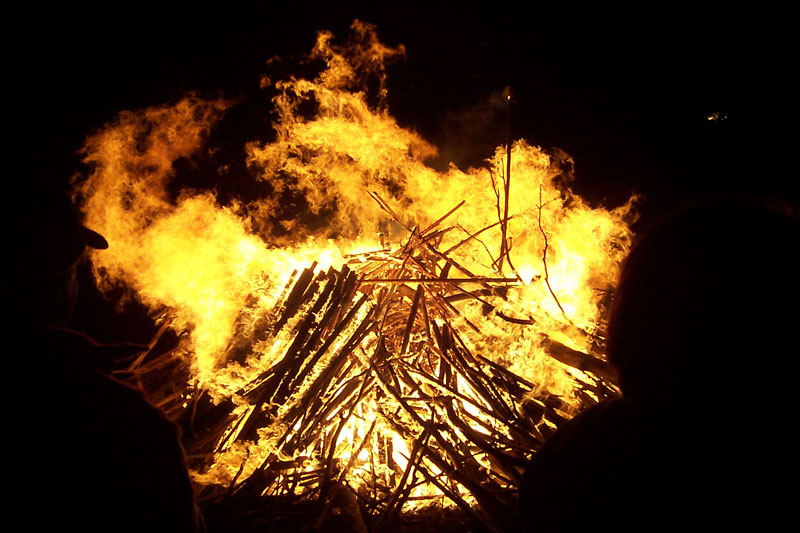
My supersticious tendencies are underdeveloped but my father is quite the closet pyromaniac, so I blame my genome for delighting in Valpurgis Night bonfires every year. But this year spring needs all the help it can get from the rest of you as well. 2013 is not the year to skimp on choirs and fires people!
IMAGE: SAPERAUD VIA WIKIMEDIA COMMONS

CUTE LOOTERS

Julgransplundring

Julgransplundring, the mere fact that there isn't an English word for it says something about it's global popularity. Looting the tree for goodies and then throwing it out, by way of dancing around it, has been a Swedish tradition since at least the 17th century. The tradition remains strong with tree robbing festivities all over the country mid-January.

A christmas party after christmas? Wait, think about it. Kid-friendly, relaxed, the decorations already in place, no gift exchange needed and last but not least: budget-friendly.

The basics are easy: sweet treats for the children and some dancing.
The advanced curriculum involves some additional food, party games and smashing (and eating) gingerbread houses.

The museum of Swedish cultural history has published 5 pamphlets with traditional songs for the occasion. Simple notation and dance instructions (in Swedish) are included. Available as free pdf documents HERE. Or "cheat" with this playlist on Youtube.

If you are less inclined to join in such follies, resort ro reading about Pippi Longstocking's treelooting party.
IMAGE: PHOTO BY GUSTAV ANDERSSON, FROM THE COLLECTIONS OF JÖNKÖPINGS LÄNS MUSEUM

YOUR GUIDE TO YULETIDE STUFFING


An excellent summary of Swedish Christmas foods by Sivert Sidebo, Scanorama.

"Unlike the Americans, Scandinavians don't eat turkey for Christmas. Instead they serve a beautifully decorated large smorgasbord, a julbord or julebord.

The idea is to eat just a little of everything because there is always more food than you have anticipated. Most Scandinavians have made the mistake of eating too much on the first round.

The first course should be filled with different kinds of herring (mustard, arlic, or onion-pickled), other fish, often salmon (smoked, pickled, cooked or peppered), caviar, boiled eggs and potatos [sic]. Many people like to have a schnapps to go with this first course. There are also those who want some schnapps with every course.

The second course should be a plate of cold cuts like patés, smoked and cooked ham, sausages, deer, turkey, goose, and lamb ribs.

The third course is the warm one. You can fill it with brown beans, small sausages, meatballs, boiled lutefisk, potato and anchovy gratin or red and browned cabbage. Are you full yet? If not, take a fourth course of rice pudding, accompanied by either cinnamon, sugar and milk, or with fruit sauce.

For your fifth course, try some different kinds of cheeses. Camembert, blue cheese, whisky cheddar, edam or perhaps some brie. The sixth course is dessert. Come on, you can down some chocolate cake, lemon or raspberry mousse, créme caramel, gingerbread cookies, crullers, or almond tarts with strawberry jam and whipped cream.

Last but not least is the seventh course, the goodie plate. Bananas, small citrus fruits, apples, hazelnuts, Brazil nuts, walnuts, jelly beans, rapberry and licorice gum drops, arrack pralines.

Now that you are pleased and content you can join the dances and games around the Christmas tree. Or take our advice: just sit back and relax."

Published with permission from Swedish inflight magazine Scanorama. 
IMAGE: IKEA ON FACEBOOK

PLING PLONG

Änglaspel i mässing


These  Änglaspel classics are available at the Byggfabriken webshop again. Last year they sold out well before christmas so hurry hurry! Also available at Rum att älska, and Designonline.
IMAGE: BYGGFABRIKEN

WIZARDRY?

StjärngossesetStjärngosseset

What do you think? Will I be able to convince the son that this is the epitomy of cool on December 13th?
IMAGE: CLAS OHLSON 

FOR BRAVE SEAMSTRESSES ONLY

A Hardanger girl, Hardanger Fjord, Norway (LOC)

Speaking of needlework, the most intricate embroidery in Norway is from the region of Hardanger. That's something to keep you busy on a rainy day. Girl in bunad from Hardanger ca 1900.
IMAGE: LIBRARY OF CONGRESS, USA [PUBLIC DOMAIN]

ALLHELGONA


Today is Allhelgonaafton in Sweden, the national holiday conveniently combining the celebration of All Saints' Day (a.k.a. All Hallows' Eve or Halloween), and All Souls' Day the first weekend in November.

It's been in vogue since the 8th century or so, meant to infuse the celtic tradition of descendant worship with a Christian purpose. Over centuries, its religious content has been modified back and forth in the flux of Catholic and Protestant influences. Sometime around the 1940's, Italian immigrants lit candles on graves on All Saints and Christmas, and the custom caught on again in Sweden. Most families celebrate with a visit to family graves or memorial sites, followed by fancy family dinners. This modest holiday is therefore the most lucrative for Swedish grocery stores, even surpassing Christmas in terms of net sales!
IMAGE: LILJEHOLMENS STEARINFABRIK, USED WITH PERMISSION

MY BUNS, MY BUNS, MY LOVELY...

bullis

It's cinnamon bun day in Sweden. What a country.

THE END IS NEAR


It doesn't take a linguistic genius to see that the Swedish word kyndel and the english word candle share the common root in latin: candela.  Candlemass marks the official end of christmas in the christian prothestant liturgical calendar.

MORE BULBOUS LOVE

Between 130-160 million tulips are purchased in Sweden every year. One million tulips sold daily between New Year's Eve and Easter, in a country with 9,5 million inhabitants. In Norway, about 80 million a year, a country with just about 5 million inhabitants. That's a lot of bulbs. 

13 AGAIN


If you didn't stow away christmas 13 days after the very day, today is the day. The 13th of January is Knut's Swedish nameday and has been since 1680. Unless of course, you want to be more orthodox and celebrate christmas until the 2nd of February: Kyndelsmässodagen...

STRAW-NG OPINIONS

Outdoor museum Skansen is a favourite spot, and its shop has a great selection that I browse for a little too long every time I visit. This goat handmade from straw divides our family in two: one side argues it's decorative and a long standing tradition, the other side wonders where one would place a straw goat for it to be decorative?
IMAGE: MUSEUM SHOP OF SKANSEN WEBSHOP

LET THERE BE LIGHT

On Gotland, an island in Sweden with a rich medieval heritage, candleholders are decorated with tissuepaper for christmas.  Tove Adman has created a version in aluminium which is less flammable, and brings a modern expression to the longstanding tradition.
IMAGE: DESIGNONLINE.SE